
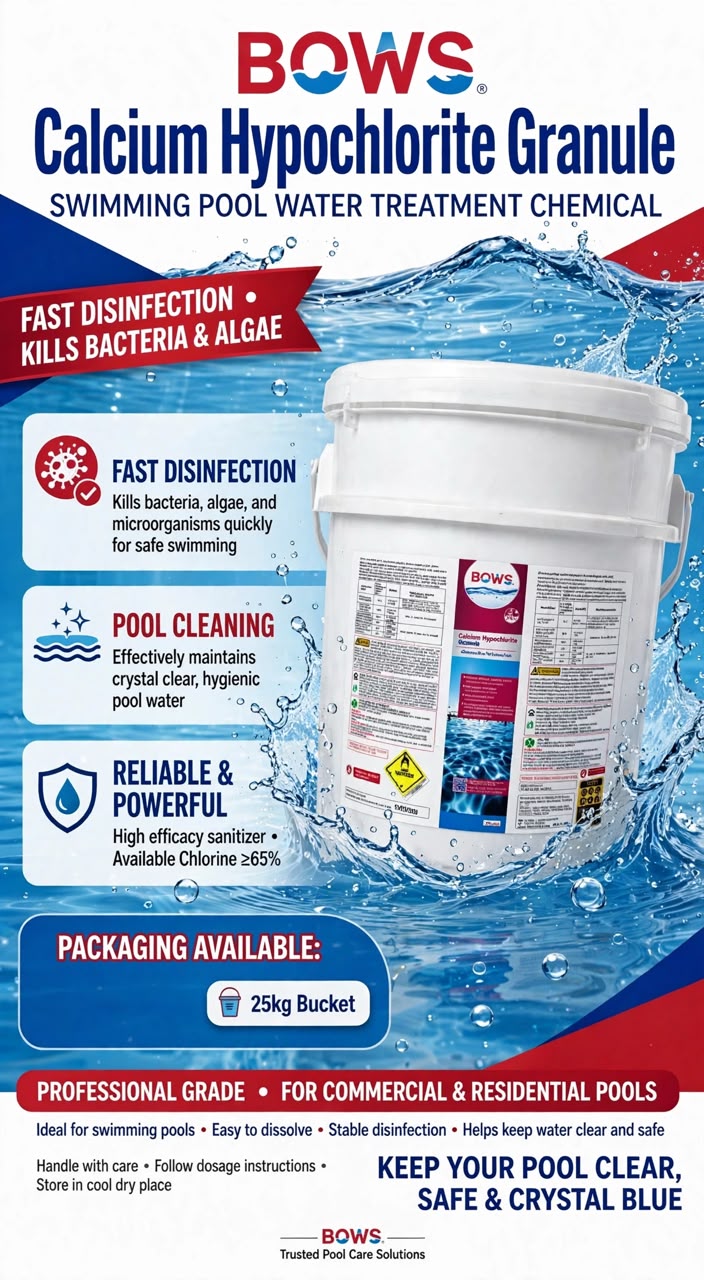
Calcium Hypochlorite TCCA Granule Powder – 25KG
3600
Roll over image to zoom in
₵2,500.00
The brand commonly distributes two types of high-strength pool chemical options:
1. BOWS Calcium Hypochlorite Granules
- Form: Granular powder.
- Chemical Profile: Calcium Hypochlorite (Ca(OCl)₂).
- Common Use: Used as a high-performance "shock" treatment to rapidly elevate chlorine levels, eliminate heavy bacteria or algae blooms, and restore water clarity.
- Packaging: Most commonly sold in 25kg industrial buckets.
2. BOWS Trichloroisocyanuric Acid (TCCA) Tablets
- Form: 3-inch, 200g solid tablets.
- Chemical Profile: Trichloroisocyanuric Acid (C₃Cl₃N₃O₃) containing 90% available chlorine.
- Common Use: Placed inside a floating dispenser or an automatic chlorinator for consistent, slow-dissolving, long-term sanitization. Because it is stabilized, it prevents the sun's UV rays from degrading the active chlorine.
Are you planning to treat a swimming pool, a household water storage tank, or a borehole? Let me know so I can help you calculate the right dosage amount or pick the right product variation.
BOWS is a highly recognized commercial brand of chemical disinfectants, most notably used for water treatment and pool sanitation in West African markets like Ghana.
The brand commonly distributes two types of high-strength pool chemical options:
1. BOWS Calcium Hypochlorite Granules
- Form: Granular powder.
- Chemical Profile: Calcium Hypochlorite (Ca(OCl)₂).
- Common Use: Used as a high-performance “shock” treatment to rapidly elevate chlorine levels, eliminate heavy bacteria or algae blooms, and restore water clarity.
- Packaging: Most commonly sold in 25kg industrial buckets.
2. BOWS Trichloroisocyanuric Acid (TCCA) Tablets
- Form: 3-inch, 200g solid tablets.
- Chemical Profile: Trichloroisocyanuric Acid (C₃Cl₃N₃O₃) containing 90% available chlorine.
- Common Use: Placed inside a floating dispenser or an automatic chlorinator for consistent, slow-dissolving, long-term sanitization. Because it is stabilized, it prevents the sun’s UV rays from degrading the active chlorine.
Safe Application and Tips
- Test the Water: Ensure your water’s pH stays between 7.0 and 7.8, as chlorine is significantly less effective if the pH spikes too high. Target a steady active chlorine reading of 1 to 3 ppm (parts per million).
- Never Mix with Acids: Absolutely avoid mixing pool chlorine or household bleach with any acidic cleaners (like toilet bowl cleaners or vinegar). This creates highly toxic, dangerous chlorine gas instantly.
- Avoid Skimmers: If using the tablet form, avoid dropping them directly into your pool’s built-in skimmer basket. When the pump turns off, concentrated acid can build up inside the skimmer, corroding your pool components over time.
Are you planning to treat a swimming pool, a household water storage tank, or a borehole? Let me know so I can help you calculate the right dosage amount or pick the right product variation.
Reviews
There are no reviews yet.